Blood Cancer Awareness Post 5: White Blood Cells

Yesterday we talked about red blood cells, and today we will talk about white blood cells. 
whitecells

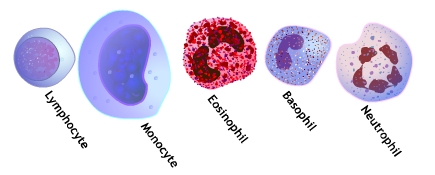
White blood cells, or leukocytes are the cells of the immune system. They are what helps your body to fight infection and foreign matter.

The most common type of white cell is the Neutrophil. Neutrophils live in the body less than a day, so your bone marrow is constantly making them to protect you from infection. Neutrophils are the first responders for microbial infections. High numbers of neutrophils are seen early in the onset of infection.

The next most common type of white cell are Lymphocytes. There are two main types of Lymphocytes. T Lymphocytes (or t-cells), which help regulate the function of other immune cells, and B Lymphocytes (or b-cells) which make antibodies. Antibodies are the proteins  that target bacteria, viruses and other foreign matter in the body.

The final three types of white blood cells are monocytes, eosinophils and basophils.

Monocytes have longer life spans than neutrophils, and are responsible for presenting pieces of pathogens to t-cells so that they will be recognized later.

Eosinophils deal mainly with parasitic infections. You also see large numbers of eosinophils during times of allergic reactions such as hay fever, or hives.

Basophils are also present during times of allergic reactions and are responsible for releasing the chemical histamine.

This is just a very brief overview of the general function of white cells, and their jobs. We will talk more about them as we get more into blood cancers later in the month!

Tomorrow we’ll be talking about my personal favorite blood cells, platelets!

Until tomorrow,

Lina
Blood Cancer Awareness Post 4: Red Blood Cells

Yesterday we discussed Blood Plasma, today we will talk about Red Blood Cells.

130627125207-large

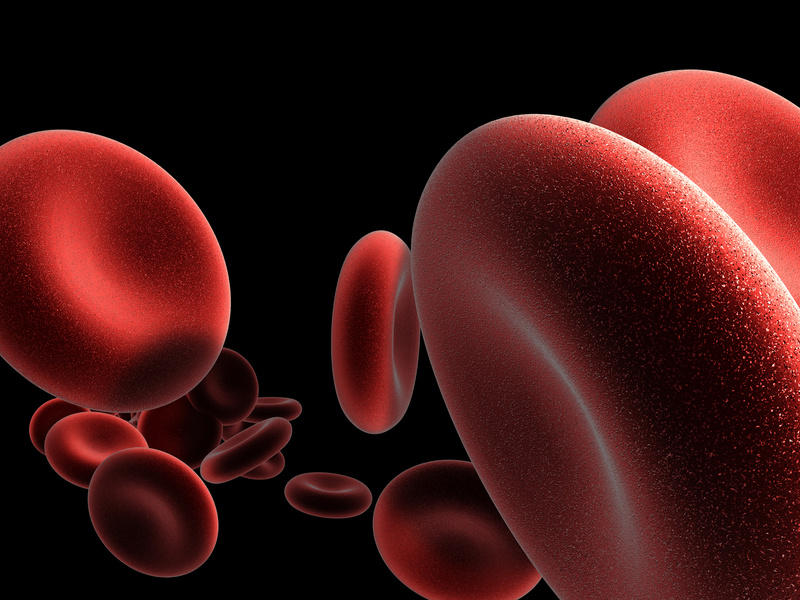
Red Blood Cells, (RBCs) also called erythrocytes, are the most common type of blood cell. Like all of our blood cells, RBCs originate in the bone marrow. They are flexible, oval shaped cells which carry oxygen and CO2 around the body. Hemoglobin, an iron rich protein, is what makes carrying oxygen through the body possible. It is also what makes your blood red. Hematocrit, is the percentage of whole blood that is made up of RBCs.

The production of RBCs is triggered by a hormone which is produced in the kidneys. This hormone tells your bone marrow to produce immature RBCs, which then spend about 7 days, maturing in the marrow. After they are matured, RBCs spend about 120 days in the system.

There is a delicate balance to all blood cells in the body, each type of cell has a proper range. When these ranges get out of whack, that’s when issues arise. Below is the averages used by my lab for each different blood component. Later we’ll go into more detail on what to pay attention to on a CBC.

blood counts

That is all for today, tomorrow we’ll be talking about White Blood Cells!

Until Tomorrow,

Lina

Blood Cancer Awareness Post 3: Blood Plasma

So, yesterday we talked about blood as a whole (haha..terrible pun…)…and in the next several articles, we’ll be breaking down our blood into each of its parts.

Today, we’ll talk very briefly about plasma.

45497505_c0013438-frozen_blood_plasma-spl-1

Plasma makes up about 55% of our total blood volume. Plasma is a kind of straw colored substance, which holds all of the rest of our blood parts in suspension. It is made up mostly of water, dissolved proteins, hormones, and CO2. It also carries waste products, clotting factors and antibodies through the system. Your plasma helps to maintain your blood volume and balance electrolytes. We don’t often think about blood plasma, but it is actually very important. The antibodies and proteins in plasma can even be used to create treatments for certain autoimmune disorders and hemophilia.

Tomorrow we’ll be talking about Red Blood Cells (RBCs)

Until tomorrow,

Lina

Blood Cancer Awareness Post 2: What Is Blood?

Sounds like a silly thing to ask, but how much do most of us really know about our blood? Just the basics, probably. And I’m willing to bet that the majority of us, until we were diagnosed with our blood disorders, never thought much about our blood, unless we were unfortunate enough to be injured in some way.

Firstly, all of our blood is manufactured in the bone marrow. Whole blood, or the blood running through your veins, arteries and capillaries is a mixture of  approximately 55% plasma, and 45% blood cells (we’ll go into more detail about each blood part in the next few articles). For now, let’s talk a little about what our blood does.

1) Oxygenated blood is carried, through arteries around the body and it delivers oxygen and nutrients to our organs and other tissues.

2) Our blood forms clots, when we have been injured, to help stop excessive bleeding. (Of course, if like me, you have too many platelets…this whole clotting thing can get a little out of hand..)

3) Our blood also carries antibodies to help fight off infection

4) Our blood brings waste products from our bodies to the kidneys, and liver, which then filter the blood. After filtering, the blood is sent back to the heart through our veins.

5) Temperature regulation is one of the functions of our blood as well. In the heat, vasodilation occurs. This allows increased blood flow through the arteries. This directs blood closer to the skin’s surface, allowing the blood to release some heat. This also helps to explain why your face will turn red when you’re exercising. The exact opposite occurs in the cold. The arteries constrict, keeping blood flow closer to the internal organs, further from the surface of the skin, helping to explain why ones face/hands/legs may appear paler than usual in the cold.

Tomorrow we’ll start breaking down our blood into the main components!

whole blood

Until Tomorrow,

Lina

Blood Cancer Awareness Month: Post Number One

Today is the first day of Blood Cancer Awareness Month!

Those of you who follow this blog know that I occasionally go on blogging-hiatus. But I have made a commitment to write EVERY DAY this month. So, be on the look out for 30 #mpnbcam posts!

So…I have been sitting here at my computer typing and deleting over and over and over again, trying to decide how to say what I’m trying to say. M, seeing my frustration asked me what was wrong, and as I explained it to him, I realized I should just say exactly what I told him!

I have been trying to find a polite, PC way to say that MPNs are overlooked, in the blood cancer world. Everyone has heard of Leukemia and Lymphoma…but not many people know about MPNs.  Trying to explain to someone what I have, I often get blank stares or “OH! You mean like leukemia?” There is a serious lack of awareness for MPNs. I am hoping that this month, along with the MPN Research Foundation, and this blog, that this will change!

If you read this blog, and like what you see, please re-post  and share with family and friends! Help me to raise awareness of MPNs!

Until tomorrow,

Lina